Research
Protein-based research on biomolecular condensates, enzyme engineering, biointerfaces, and bioprocesses at the BioMolE Lab.
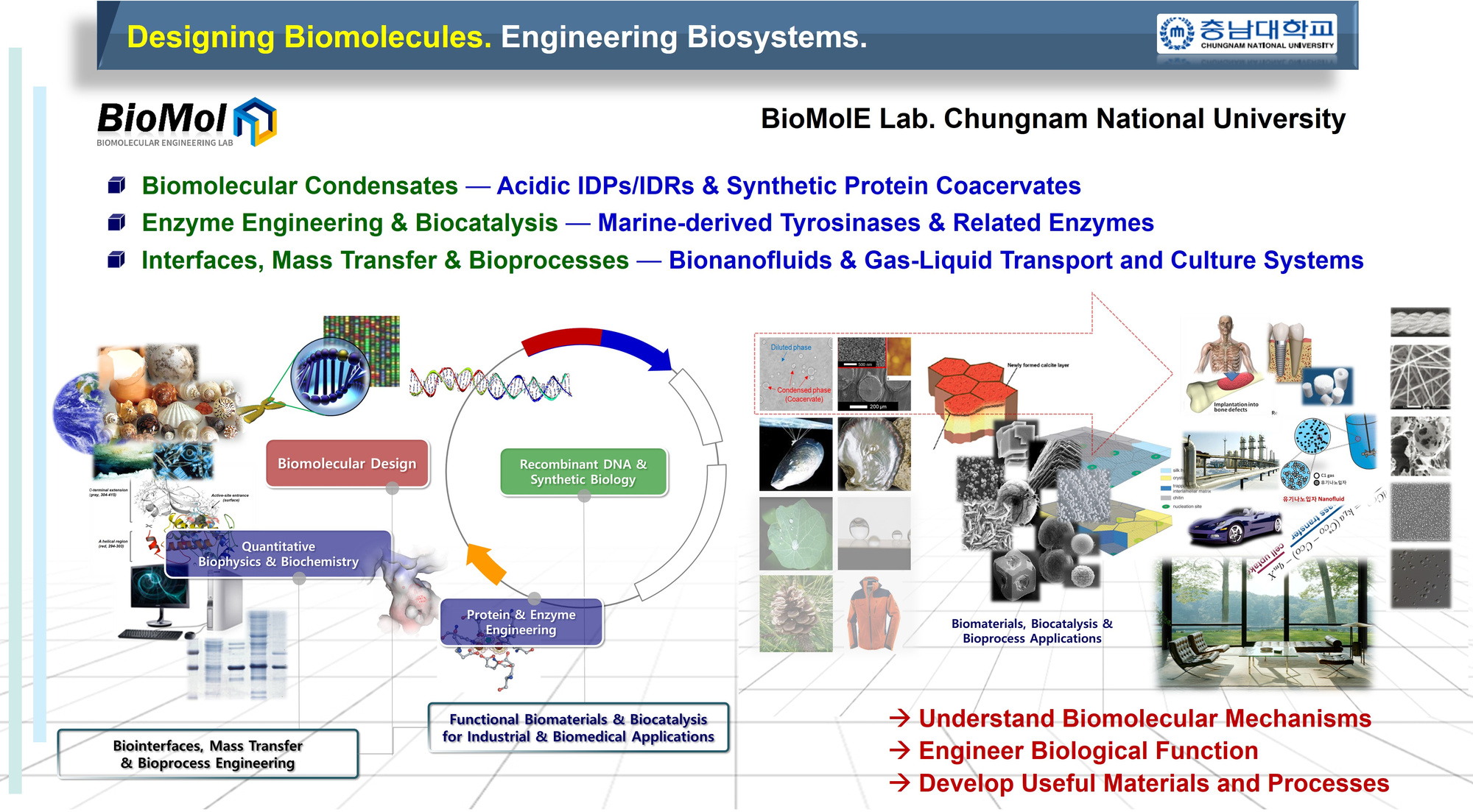
BioMolE Lab studies how molecular interactions affect biomolecular organization, catalytic activity, and bioprocess performance. Our research is organized into three connected areas. In each area, we identify the key mechanism, measure system behavior, and use the results for engineering design.
1. Biomolecular Condensates & Functional Biomaterials
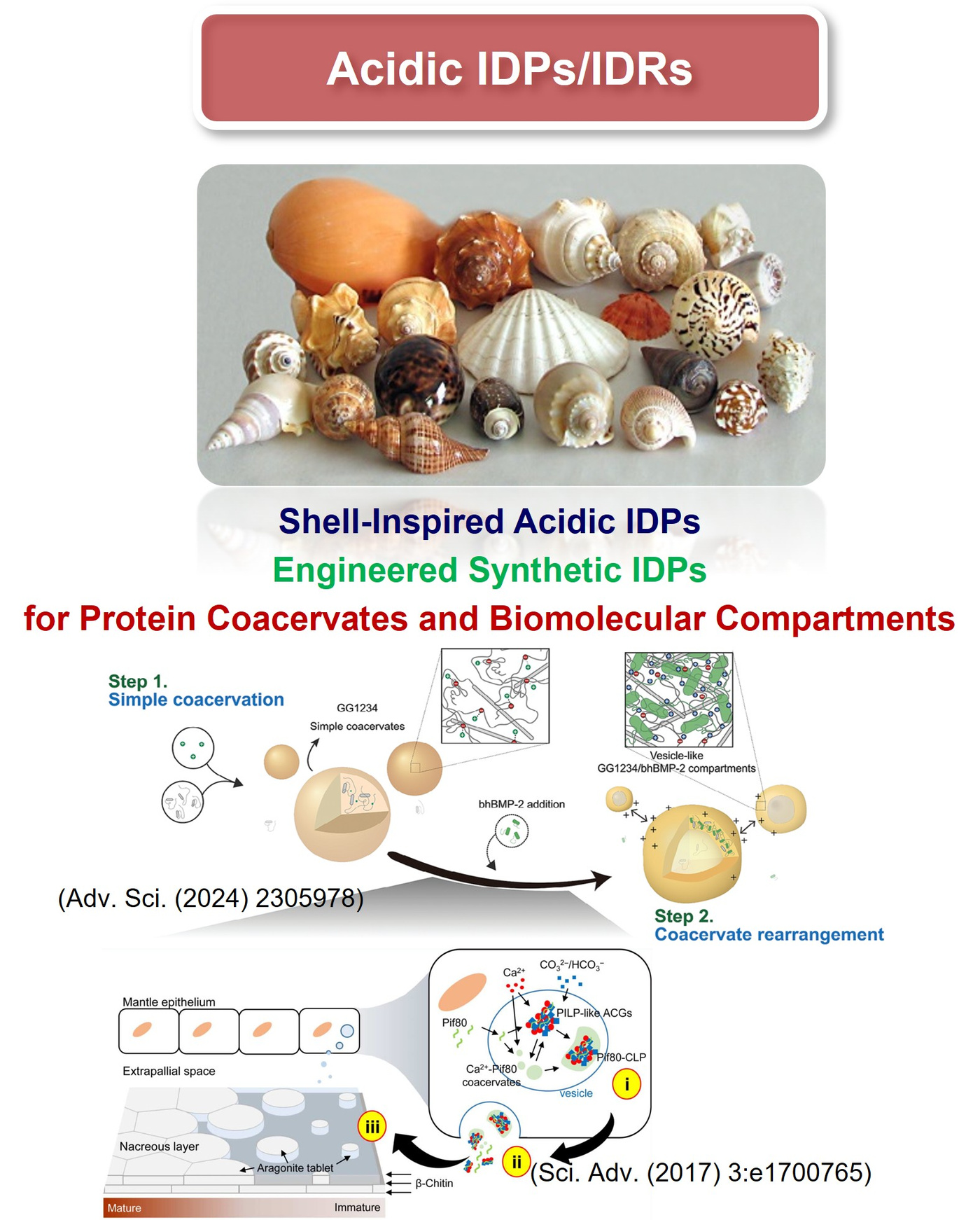
We study coacervation and phase separation of acidic intrinsically disordered proteins and regions (IDPs/IDRs) and engineered proteins. Using shell-originated acidic and synthetic proteins, we examine how protein sequence, acidic-domain length, charge, pH, salt, and partner proteins affect droplet formation, molecular partitioning, and interfacial reorganization.
Our research has expanded from simple and complex coacervation and biomineralization to protein-induced core–shell compartments. These studies help us understand how protein interactions control the structure and function of biomolecular condensates.
Core Methods
- Recombinant protein design, expression, and purification
- Phase-behavior mapping and turbidity analysis
- Fluorescence and label-free microscopy
- Image and particle analysis
- Zeta-potential and colloidal characterization
Selected Publications
- Acidic Low-Complexity Domain Truncation Modulates Coacervation and Cationic Protein-Induced Morphological Reorganization — Colloids and Surfaces B: Biointerfaces (2026)
- Spontaneous Transition of Spherical Coacervate to Vesicle-Like Compartment — Advanced Science (2024)
- Control of Nacre Biomineralization by Pif80 in Pearl Oyster — Science Advances (2017)
2. Enzyme Discovery, Engineering & Biocatalysis
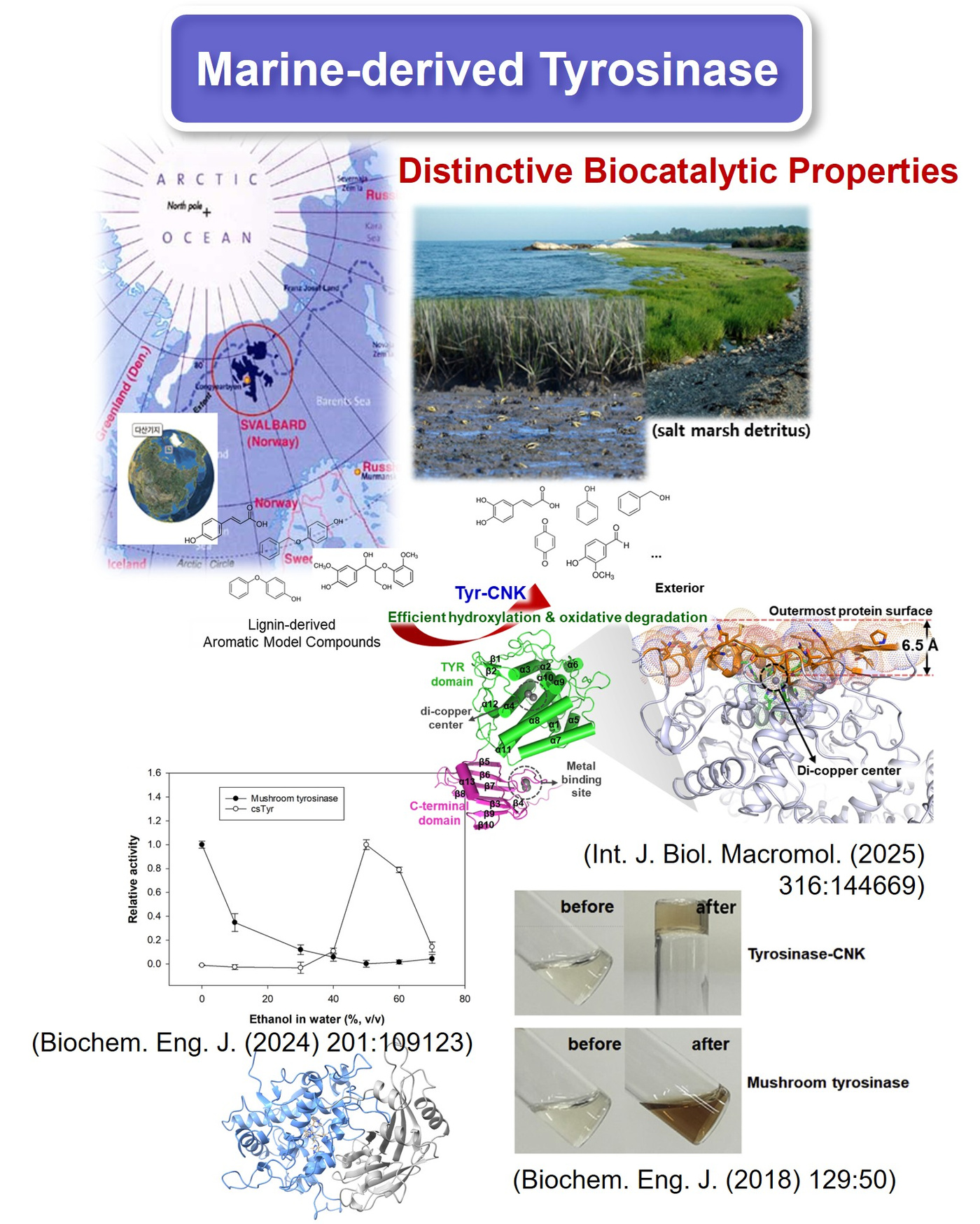
We discover and characterize enzymes with useful catalytic properties. Marine tyrosinases are major model enzymes in our laboratory.
Using marine-derived tyrosinases and related enzymes, we study enzyme kinetics, substrate specificity, stability, and structure–function relationships. We also use protein engineering to improve enzyme activity and apply the enzymes to biocatalysis, immobilization, and biosensing.
Core Methods
- Gene cloning and site-directed mutagenesis
- Recombinant protein production and purification
- Enzyme kinetics and substrate-specificity analysis
- Protein structure and function analysis
- Biocatalytic reaction optimization
- Enzyme immobilization and activity-based sensing
Selected Publications
- Archaeal Tyrosinase as a Versatile Biocatalyst for Lignin-Derived Aromatic Compounds Valorization — International Journal of Biological Macromolecules (2025)
- Tyrosinase from Citreicella sp. as an Organophilic Enzyme for Catechol Biosynthesis — Biochemical Engineering Journal (2024)
- Efficient Preparation of a Permanent Chitosan/Gelatin Hydrogel Using an Acid-Tolerant Tyrosinase — Biochemical Engineering Journal (2018)
3. Biointerfaces, Mass Transfer & Bioprocess Engineering
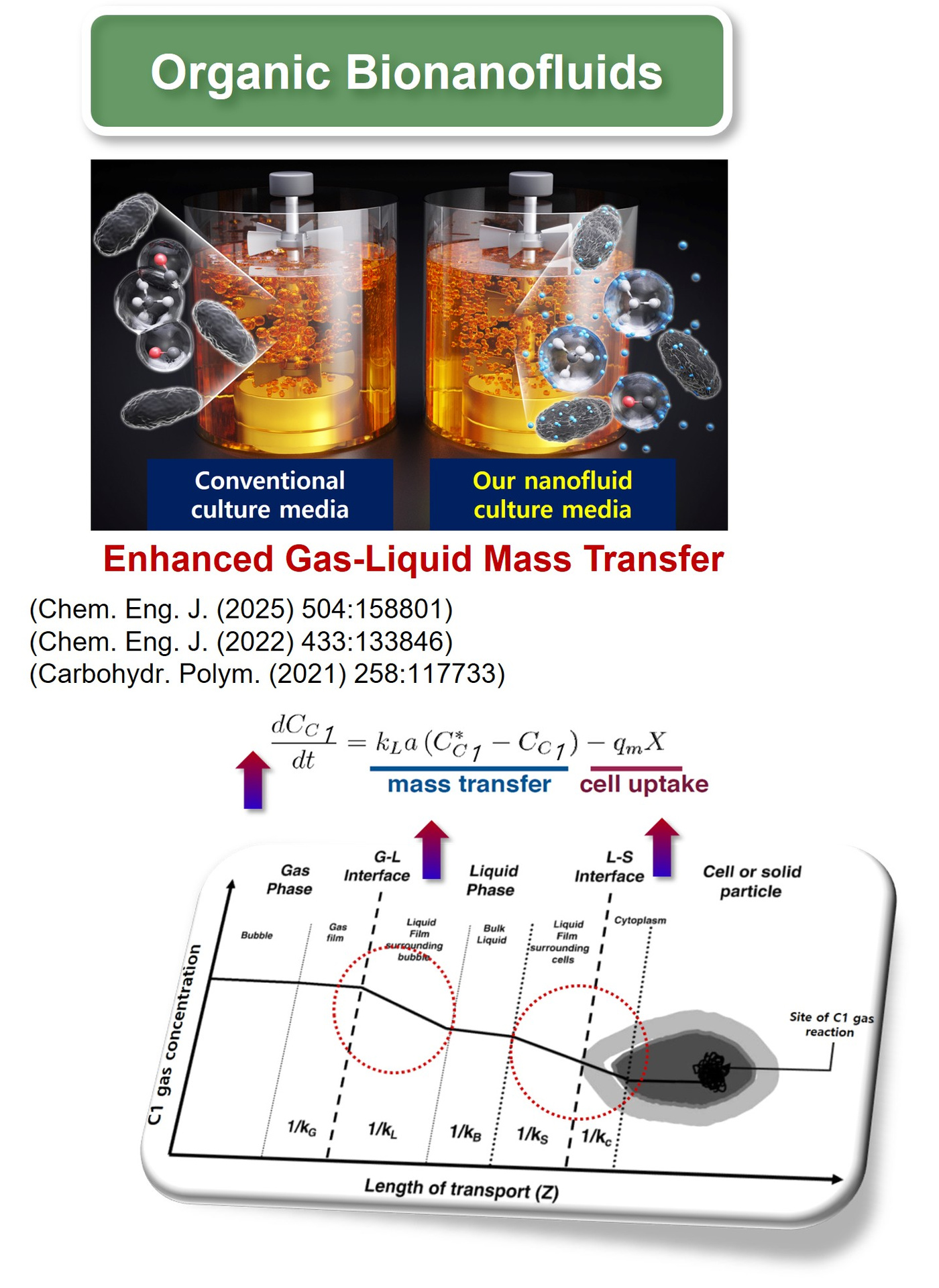
We study how interfaces and mass-transfer processes affect the supply of gases and dissolved substrates in biological systems. We measure transport behavior and relate it to cellular responses and process performance.
Bionanofluids and bio-derived dispersed materials have been used as representative systems in our gas–liquid mass-transfer studies. Examples include chitosan/oleamide nanofluids and tannic acid–Fe³⁺-coated cellulose nanocrystals. We apply the same approach to different gas-transfer and cultivation systems to identify transport limitations and improve operating conditions.
Core Methods
- Gas–liquid mass-transfer measurement
- Microbial cultivation and bioreactor operation
- Gas consumption and metabolite analysis
- Evaluation of dispersed materials and biointerfaces
- Process-data analysis
- Assessment of transport limitations and operating conditions
Selected Publications
- Bionanofluids Enhance Methane Bioconversion and Reshape Time-Resolved Methanotroph Physiology — Journal of Biological Engineering (2026)
- Molecular Regime Shift from Kinetic Limitation Condition to Mass-Transfer Limitation Condition for Stabilizing CO Metabolism by Microorganisms — Chemical Engineering Journal (2025)
- Chitosan/Oleamide Nanofluid as a Significant Medium for Enhancing Gas Utilization Efficiency in C1-Gas Microbial Biotransformation — Chemical Engineering Journal (2022)
- Cellulose Nanocrystals Coated with a Tannic Acid–Fe³⁺ Complex as a Significant Medium for Efficient CH₄ Microbial Biotransformation — Carbohydrate Polymers (2021)
Integrated Research Approach
The experimental systems differ, but our research follows the same basic process:
We first identify the main molecular or transport mechanism. We then measure its effect, design an engineering strategy, and test whether the intended function is achieved.
Research Training & Career Paths
Graduate students learn how to define research questions, design experiments, analyze data, and present their results. They also gain practical experience in protein production, enzyme analysis, microscopy, biological cultivation, and process engineering, depending on their research project.
This training is relevant to research and development in:
- Protein and enzyme engineering
- Industrial enzymes and biocatalysis
- Biomolecular materials and protein formulation
- Biosensors and analytical biotechnology
- Fermentation and bioprocess development
- Mass transfer and process engineering
- Environmental and bioresource engineering
- Biotechnology and biopharmaceutical research
- Universities and government-funded research institutes
Students also develop skills in scientific writing, oral presentation, literature review, teamwork, and independent problem solving. Our aim is to train researchers and engineers who can understand a problem, evaluate experimental evidence, and develop practical solutions.